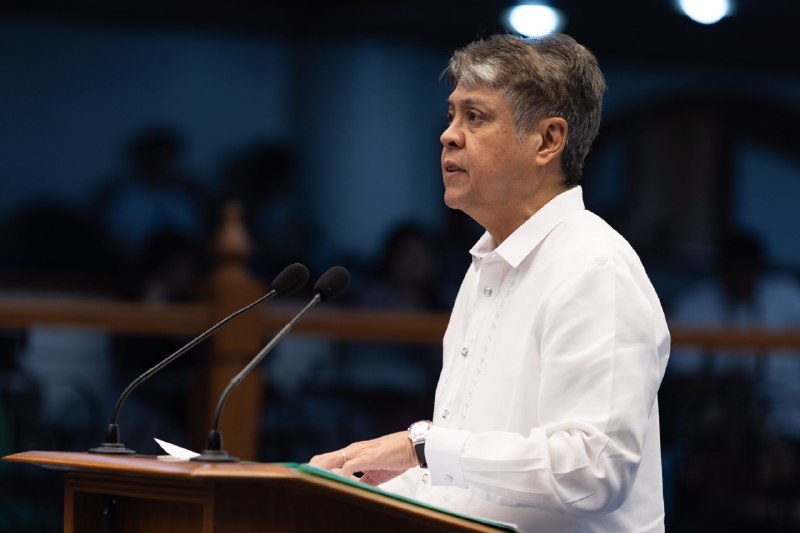
Senator Francis “Kiko” Pangilinan on Monday welcomed the Senate’s approval on third reading of his proposed twin measures—the Agriculture and Fisheries Extension Act and the Agricultural Cooperatives Act—saying that these are vital reforms to strengthen the country’s food security agenda and uplift the lives of farmers and fisherfolk.
The Senate on Tuesday, July 28, brought these two measures a step closer to becoming laws, marking a significant step toward building a more resilient, productive, and sustainable agriculture sector that can ensure a stable supply of affordable food for every Filipino family.
“There is no hope for food security if we don’t empower the people who produce our food. If you look at our neighbors in Asia, they have agri extension workers down to the granular level. Sa Taiwan, there is one extension worker for every 18 farmers. It is our hope that if Senate Bill No. 1991 becomes law, we can provide technical and financial assistance to our farmers and fisherfolk,” the senator said.
The proposed Agricultural and Fisheries Extension Services Act seeks to establish a stronger, more responsive, and better-coordinated national extension system that will provide farmers and fisherfolk with timely technical assistance, research-based technologies, climate-smart farming practices, and continuous capacity-building.
Senate Bill No. 1990, or the Agricultural Cooperatives Act, will reestablish the Bureau of Agriculture Cooperatives. It aims to strengthen farmers’ and fisherfolk’s capacity to organize themselves and compete effectively.
Once capacitated, agricultural cooperatives will have improved access to financing, markets, equipment, and value-adding opportunities.
“An investment in our farmers and fisherfolk is an investment in the country’s food security. Kapag mas malakas ang pagtatanim at pangingisda, mas matibay ang ating food supply na siyang nagbibigay ng proteksyon sa ating merkado laban sa mga problema tulad ng global fuel crisis at iba pa,” Pangilinan explained.
“This is how we make food more affordable while ensuring that those who feed the nation can live with dignity,” he added.
After the third reading, bills are transmitted to the House of Representatives for its own reading and approval process, sent to a conference committee to reconcile conflicting provisions, and submitted to the President for final action.
The senator, who has championed agricultural reforms for more than a decade, also thanked his fellow senators for supporting the measures. He expressed hope that Congress would soon complete its own legislative process.
“Our farmers and fisherfolk have waited long enough for these reforms. I thank my colleagues for recognizing the urgency of these measures. I look forward to their swift enactment so we can provide our food producers with the support they need and strengthen our country’s capacity to feed every Filipino,” he said.
Pangilinan is also behind the landmark 2019 Sagip Saka Act, which allows national and local government units to purchase food directly from farmers and fisherfolk.
The Sagip Saka law and his proposed twin measures stand to complement each other because while Sagip Saka addresses the demand side, the agriculture extension services and agricultural cooperatives bills aim to respond to the country’s food supply issues.