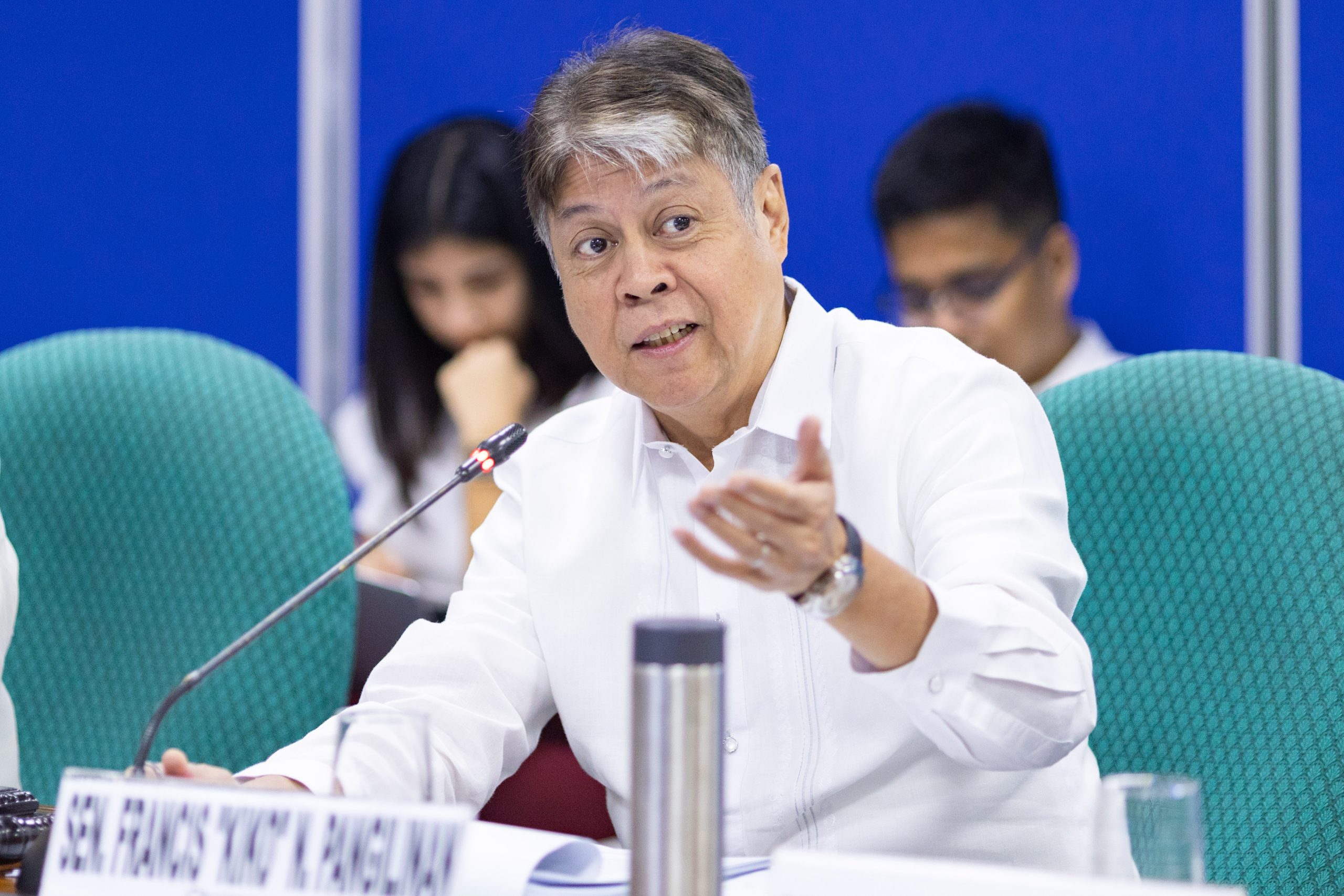
As planning for the 2027 national budget begins, Senator Francis “Kiko” Pangilinan called for the Department of Agriculture (DA) to prioritize transportation and cold storage facilities in its proposed budget, saying that stronger post-harvest and logistics infrastructure is needed to prevent oversupply from driving down the income of farmers and fisherfolk.
The veteran lawmaker reminded the agency that beyond increasing agricultural production, it must also ensure that farmers and fisherfolk have adequate facilities to move, store, and market their produce.
“Kahit marami tayong ma-produce na bigas, sibuyas, kamatis, at marami tayong huling isda, kung wala namang maayos na transportasyon o pasilidad para maiimbak ito, balewala ang hirap ng ating mga magsasaka at mangingisda,” the senator, who has been advocating for the empowerment of farmers and fisherfolk for more than a decade, said.
Aside from stressing the importance of ensuring that fresh and nutritious vegetables, crops, and seafood reach the markets, Pangilinan also noted how farmers and fisherfolk suffer when agricultural products are produced in large volumes but cannot be transported or stored properly.
He pointed out that food producers are forced to sell their harvest at “very low prices,” and in some cases they have to throw it away or let it spoil.
The lawmaker himself has rescued 12 tons of surplus tomatoes in Rizal, Nueva Ecija last year, preventing crop wastage due to oversupply.
This was made possible through his 2019 Sagip Saka Act, a law that allows national government agencies and local government units (LGUs) to purchase agricultural products directly from farmers and fisherfolk without public bidding.
“Kapag bagsak ang presyo dahil sa oversupply, ang magsasaka at mangingisda ang unang nalulugi. Ibebenta ito nang palugi sa mga middleman, na siya namang magbebenta nito nang doble-doble sa mga pamilihan. Lugi na nga ang ating mga magsasaka at mangingisda, naabuso pa ang ating mga mamimili,” he lamented.
The recent flooding along the San Simon section of the North Luzon Expressway (NLEX) has also raised concerns among food producers and food security advocates, as Pangilinan warned that prolonged traffic disruptions could lead to food spoilage, reduced market arrivals, temporary shortages, and higher prices.
He noted that longer travel times also increase the cost of transporting agricultural products, as producers and traders must shoulder additional expenses for fuel, driver overtime, refrigeration, ice, toll fees, and longer alternative routes.
Even products that are not highly perishable, such as rice and animal feeds, could become more expensive as these added transportation costs increase their landed cost.
Ultimately, Pangilinan said, these additional expenses are passed on to consumers through higher retail prices, placing further pressure on household budgets.
The senator also underscored the critical role of LGUs, as well as the management of NLEX and the Metro Manila Development Authority (MMDA), in ensuring the continuous movement of food supplies to markets amid flooding and other disruptions.
He called for the establishment of “green lanes” for trucks carrying food and live animals, the designation of clear and dependable alternative routes, and the deployment of mobile cold-storage facilities, ice, and rescue-transfer equipment to prevent the spoilage of agricultural products.
Pangilinan also pushed for emergency procurement of food through KADIWA or LGUs to help absorb stranded agricultural supplies and ensure that farmers and food producers do not suffer further losses.
He is also urging the permanent elevation and flood-proofing of the San Simon portion of the NLEX to prevent recurring disruptions along a critical food-transport corridor.
##########