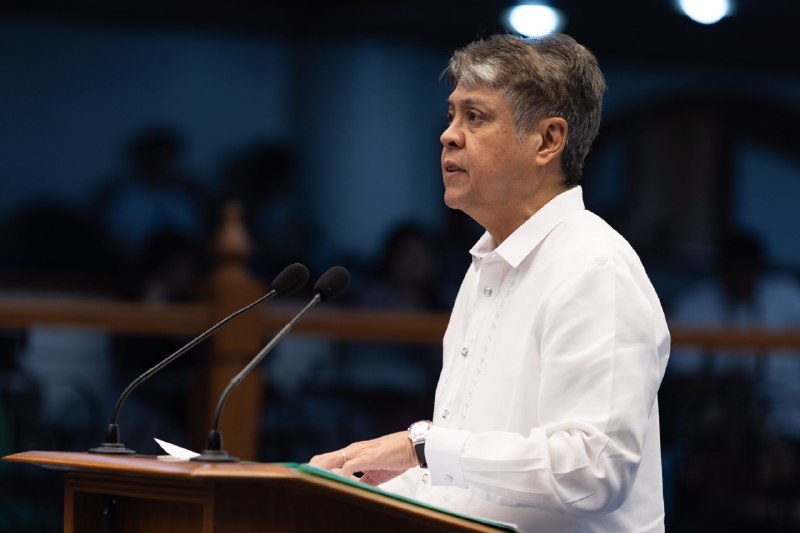
Senator Francis “Kiko” Pangilinan welcomed President Ferdinand “Bongbong” Marcos Jr.’s decision to put agriculture and food security as one of the focuses of his State of the Nation Address (SONA) on Monday, July 27.
The four-term lawmaker, who has championed agricultural reforms and their modernization for more than a decade, said that the President’s recognition of the country’s food challenges is a crucial step toward securing a more stable and affordable food supply for every Filipino.
“By prioritizing agriculture and food security, this administration is recognizing the challenges faced by our agriculture sector and the imperative to act right now. Food security must remain at the heart of our national agenda,” he said.
“Napakatagal nang panahon dala-dala ng ating mga magsasaka at mangingisda ang responsibilidad ng pagpapakain sa atin habang patuloy na nagkukulang ang gobyerno sa pagbibigay ng suporta sa kanila. It is encouraging to hear agriculture take its rightful place in the country’s development priorities,” the senator added.
In his SONA, President Marcos identified his administration’s plans to continue modernizing and reforming the country’s agriculture sector.
Pangilinan said he will also continue to push for the passage of his twin bills—Senate Bill No. 1990, or the Agricultural Cooperatives Act, and Senate Bill No. 1991, or the Agriculture and Fisheries Extension Act.
As the author and sponsor of the bills that have already passed on second reading at the Senate, he explained that these measures are a significant step toward building a more resilient and productive agriculture sector.
The senator emphasized that providing farmers and fisherfolk with accessible technical assistance, modern technologies, training, and stronger cooperatives will enable them to increase productivity, improve incomes, and become more resilient against the impacts of climate change, rising production costs, and market uncertainties.
“If we want to achieve food security, it begins with the welfare of our farmers and fisherfolk. Affordable, sufficient, and nutritious food will only be possible and accessible if we ensure that our food producers receive the support they need. With stronger extension services and even stronger cooperatives, our farmers and fisherfolk will become more productive, competitive, and financially secure,” Pangilinan said.
The lawmaker noted that for decades, agricultural extension services have been fragmented and uneven across local government units, leaving many farming and fishing communities without regular access to technical expertise, innovation, and capacity-building programs.
Strengthening the country’s agricultural extension system, he said, will bridge these gaps while ensuring that modern knowledge and technologies reach communities where they are needed most.
He likewise underscored the vital role of cooperatives in helping small farmers and fisherfolk access financing, inputs, post-harvest facilities, processing, and better markets, allowing them to earn more from their hard work.
Pangilinan expressed hope that the two bills will soon be passed into law.
“Investing in agriculture is our country’s most efficient strategy to reducing hunger, stabilizing food prices, generating employment, and strengthening the economy,” he added.