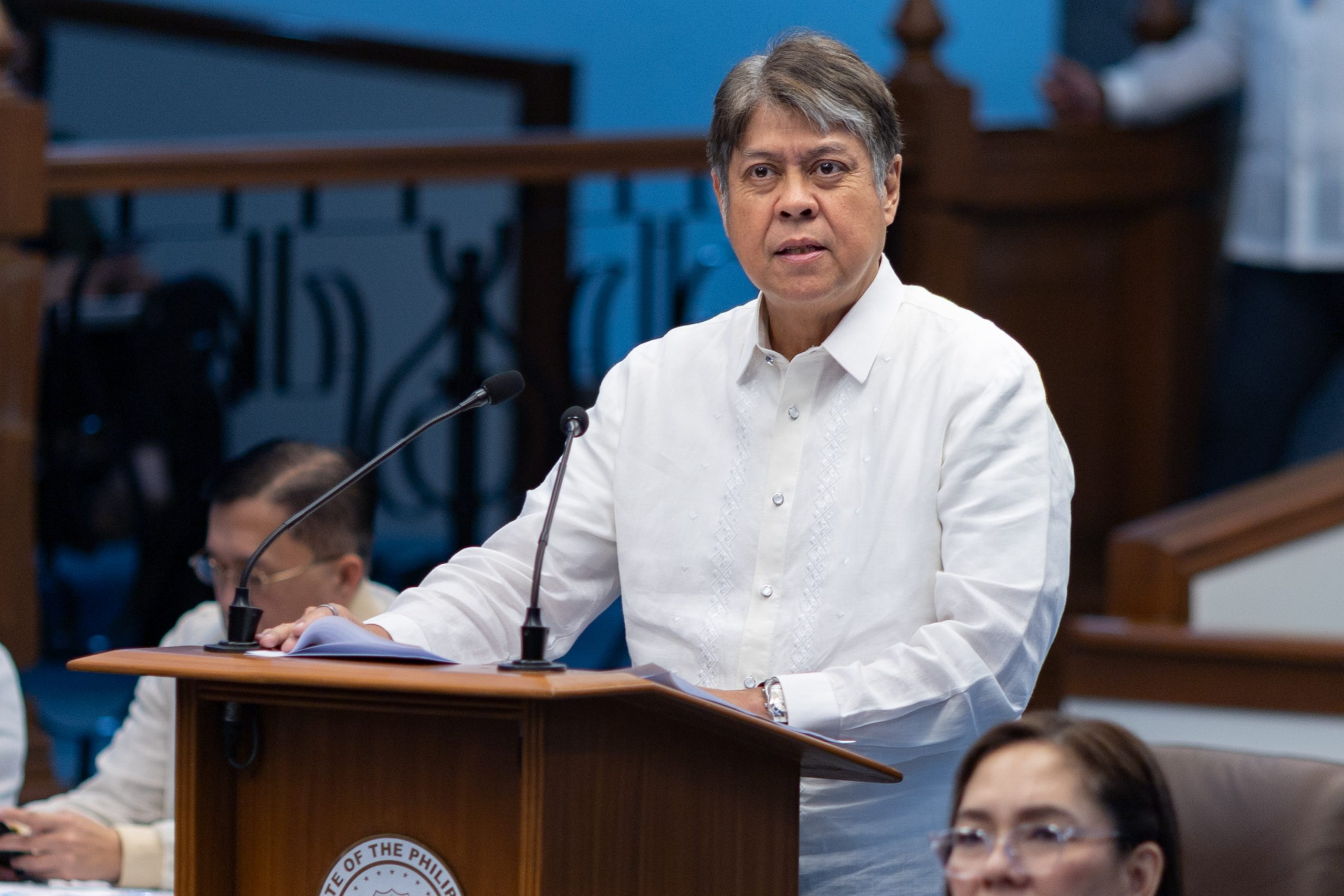
Senator Francis “Kiko” Pangilinan welcomed the Senate’s approval on third reading of the proposed Magna Carta for Barangay Health Workers (BHWs), saying the measure is long overdue recognition for the country’s frontliners at the community level.
Pangilinan said barangay health workers have long served as the first line of care for Filipino families, especially in underserved communities, yet many continue to receive little compensation and limited government support despite the critical role they play.
“Napakatagal nang panahon na napabayaan ang ating mga barangay health workers. Kitang-kita naman natin noong pandemic na sila ang unang rumeresponde kapag may kailangan ng tulong sa barangay,” he stressed. “Sila ang unang nilalapitan sa barangay kapag mayroong may sakit. Hindi naman agad kaya magpa-ospital, kaya sina Ate at Kuya muna ang tinatawag.”
“Hanggang kailan ba sila dapat maghintay para sa tamang sweldo at mga benepisyo? Sa totoo lang, late na late na nga ito kaya mabuti naman at finally, malapit-lapit na itong maging batas. Panahon na para suklian ang sakripisyo nila,” he added.
Pangilinan himself has authored Senate Bill No. 729, which was consolidated together with other measures to create Senate Bill No. 1905, or the Magna Carta of Barangay Health Workers.
The measure aims to uplift the welfare of barangay health workers by providing them with incentives and benefits through the collaborative efforts of local government units and the national government.
Under the bill, BHW volunteers will receive a monthly honorarium of not less than P3,000, as well as transportation, subsistence, and hazard allowances, cash gift, and loyalty incentive from the municipality or city they serve.
The Department of Health, the Department of Interior and Local Government (DILG), and the Department of Budget and Management (DBM) will be tasked to review and adjust the volunteer benefit every three years.
The DBM, together with the Civil Service Commission (CSC), the DOH, and LGUs, will also establish the position classification for BHWs and the corresponding salary grades to eventually transition the compensation of BHWs from honorariums to regular salaries, in recognition of their essential role in delivering primary healthcare services.
Similarly, the measure mandates insurance coverage and free legal services, as well as education, career advancement, and educational programs for BHWs.