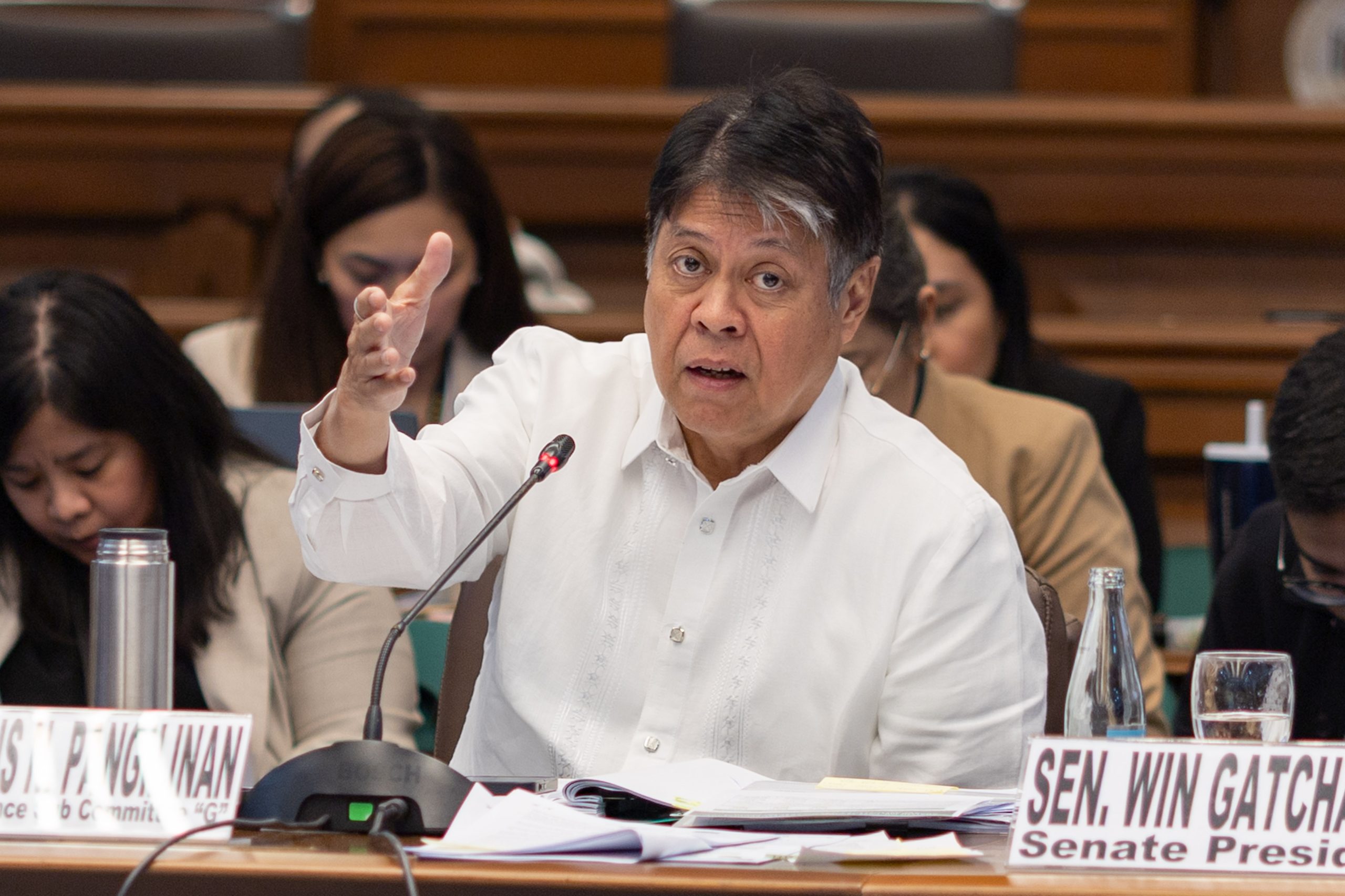
Senator Francis “Kiko” Pangilinan raised concerns over what appears to be a recurring pattern among government agencies of allowing imported rice and other agricultural products to enter the country during the local harvest season, threatening farmers’ livelihoods and undermining the country’s food security.
The senator, who heads the Senate Committee on Agriculture, Food, and Agrarian Reform, said the recurring timing of agricultural imports raises questions about whether government policies and importation decisions are being implemented in a way that protects local producers or exposes them to unfair competition just as they are ready to bring their produce to market.
“Ang maliwanag, hindi dapat pumapasok yan ng harvest season, so we will look at the details of this,” he said when asked by veteran broadcaster Ted Failon in a radio interview on Friday, October 23, about how the Department of Agriculture (DA) has been violating its own rules in allowing imported agricultural products during harvest season.
“Dahil talagang, pati sa onions nangyari ’yan. Naghearing kami noong March—last March—sa onions. May patakaran na dapat hindi na maglalabas tuwing anihan, pero ginawa pa rin—pumasok pa rin ang ilang tonelada na sibuyas noong December, January. Labag doon sa patakaran. Well, so far, mukhang modus operandi,” he said.
Pangilinan explained that the DA’s 60-day rule dictates that agricultural products must leave the port of origin within 60 days and that their release cannot coincide with the local harvest season to protect farmers from price drops.
“Hindi dapat pinapasok ang imported na bigas sa panahon ng anihan. Kasi tuwing nangyayari ‘yan bumabagsak ang presyo ng palay. Binibili—binebenta ng palugi, binibili ng napakamura ng mga trader at sila ang tiba-tiba, diba? So, kuwestiyonable itong dalawang pagpasok dahil third week na ng September. Ibig sabihin yan, hanggat maprocess yan, eh lalabas na yan October,” he pointed out.
The lawmaker said he will call for an investigation into the estimated P700 million worth of smuggled rice shipment seized in the ports of Davao and Limay, Bataan last month.
“Gusto natin malaman ang puno’t dulo nito,” he stressed, adding that the investigation will most likely begin by the first week of November.
MV Tay Son 2, which was carrying 12,500 metric tons of rice, attempted to leave the Port of Davao without completing the required Customs processing, prompting the Philippine Navy to intercept and apprehend the vessel on the high seas.
On the other hand, MV Lucky Star, which was apprehended at the Port of Limay because its import permit was not consistent with the actual contents of the shipment, was found with nearly 7,500 metric tons of rice
The two vessels are believed to be carrying a combined 20,000 metric tons of Vietnamese rice, with an estimated value of around P700 million based on the prevailing world market price of $420 per metric ton.
But amid the reported P700-million worth of smuggled rice that attempted to enter the country through the ports of Davao and Limay, Pangilinan lamented that no big-time smugglers have been jailed despite Republic Act No. 12022, or the Anti-Agricultural Economic Sabotage Act, classifying agricultural economic sabotage involving at least P10 million worth of agricultural products as a non-bailable offense.
The senator said he has already coordinated with the Department of Justice (DOJ), the Department of Agriculture (DA), the National Bureau of Investigation (NBI), and the Anti-Agricultural Economic Sabotage (AAES) Council regarding the shipments at the ports of Davao and Limay.
Under Republic Act No. 12022, or the Anti-Agricultural Economic Sabotage Act, the government is mandated to strengthen measures against agricultural smuggling, hoarding, profiteering, and cartel. The law also empowers the Anti-Agricultural Economic Sabotage Council to coordinate investigations and direct the speedy investigation and prosecution of those responsible for these offenses, including any government officials found to have participated in the illegal activities.
He also announced that the committee report on the hearings he led earlier this year into the rampant smuggling of agricultural products, which allegedly involved high-ranking government officials, is expected to be released by the end of next month.
“That’s why the report will be coming out before the end of the month. Pasensyahan na lang tayo. We call it as we see it,” the senator said.
“Kaya pag sinabi nating pasintabi nalang sa mga nasa gobyerno—pag sinabi nilang cartel hindi naman pwedeng mag exist yung cartel nang walang nakasabwat sa gobyerno,” he added.
KIKO SEES POSSIBLE MODUS OPERANDI IN TIMING OF AGRI IMPORTS DURING HARVEST SEASON