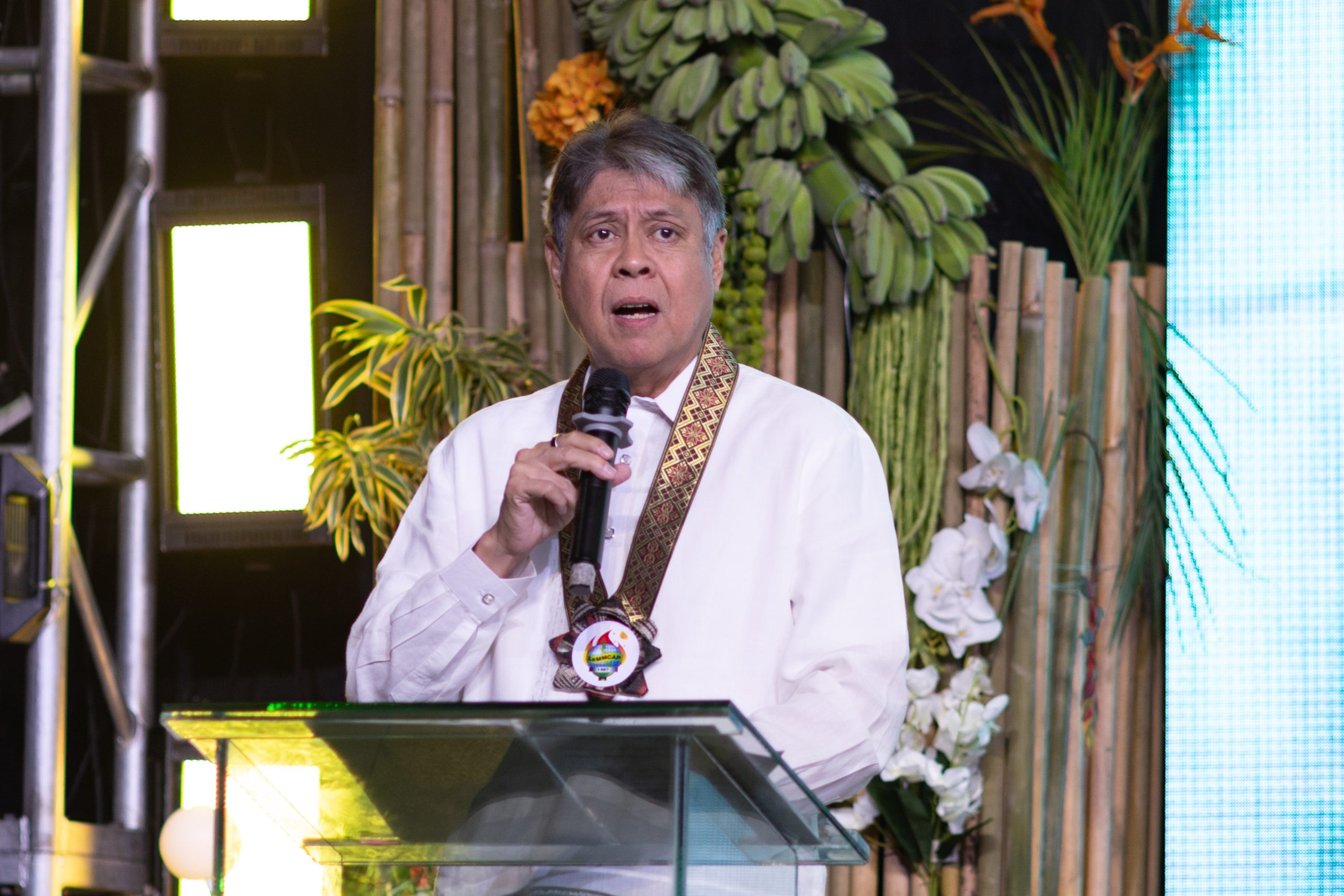
Senator Francis “Kiko” Pangilinan is urging the swift passage of key agricultural measures—the renationalization of agricultural and fisheries extension services and the reestablishment of the Bureau of Agriculture and Fisheries Cooperatives—to strengthen the country’s food systems and resilience as the Philippines faces mounting pressures from climate change and disruptions in the global food supply chain.
The senator emphasized the need to institutionalize support for agricultural extension services and farmers’ and fisherfolk’s cooperatives, describing them as critical pillars in improving productivity, empowering local farming and fisheries communities, and ensuring food security.
He said this during a keynote speech delivered at the 23rd League of Municipal Agricultural Officers, Municipal and City Agriculturists of the Philippines’ (LeMMCAP) National Convention on Tuesday, April 7, in General Santos City.
“If we can unify our extension leadership, empower our frontliners — who in turn, will empower our farmers and fisherfolk — and anchor our work in the realities of climate change and global risks, then we will have done more than pass a law. We will have strengthened the very foundations of our food security in the country,” he told the audience composed of Mayors, Vice Mayors, Sangguniang Bayan Members, Agricultural Extension Service Workers, City and Municipal Agriculturists, and local farmers and fisherfolk.
He explained the significance of his twin measures—the proposed Senate Bill No. 1990, or the Agricultural and Fisheries Cooperatives Act, and Senate Bill No. 1991, or the Agriculture and Fisheries Extension Act—both currently in second reading in the Senate.
Pangilinan, who chairs the Senate Committee on Agriculture, Food, and Agrarian Reform, said the proposed bills will “reform (and) restructure our agriculture and fisheries sector down to the grassroots” to strengthen the weakest link—farmers and fisherfolk—in the country’s food supply chain.
“Kahit anong gawin pa natin sa dami ng istraktura, farm-to-market roads, bilyon-bilyong halaga ng pautang, equipment, cold storage facilities, warehouse, kapag hindi organisado ang ating mga magsasaka at mangingisda, ay paulit-ulit lang ang gastos dahil hindi ma-absorb ng tama at maaapektuhan pa rin ang ating yields,” he said.
The proposed agricultural extension measure aims to establish a more coordinated, science-based system for delivering technical assistance, training, and innovation to farmers and fisherfolk.
The measure will create the Bureau of Agriculture and Fisheries Extension (BAFEX), recognize municipal agriculture extension service workers as the “last-mile food soldiers,” and enhance their capacity to respond to evolving environmental and market conditions.
“A unified BAFEX introduces, down to the municipal level, a range of mainstream, climate-resilient, and sustainable practices — such as drought-tolerant varieties, water-saving irrigation, diversified cropping, agroforestry, and improved fisheries management — through standardized yet localized training implemented nationwide,” the senator stated.
“BAFEX can develop and use common databases and indicators so that decisions are based on evidence, and hindi yung hula-hula,” he added.
Pangilinan also pointed out how strengthening agriculture and fisheries cooperatives will empower farmers and fisherfolk through preferential treatment to agriculture and fisheries cooperatives.
This will help the cooperatives achieve economies of scale that they can use to enter into negotiated contracts with government agencies and instrumentalities under the Sagip Saka Act.
The 2019 Sagip Saka Act is a law authored and passed by Pangilinan in 2019 to allow national government agencies and local government units to buy food directly from farmers’ and fisherfolk’s cooperatives without public bidding.
The Sagip Saka Act is providing significant benefits to farmers. During his visit to General Santos City, the senator praised the positive impact of this law, as shown in a report by the Lamluma Diversified Farmers Agriculture Cooperative, based in Surallah, South Cotabato.
With 512 members and producing a variety of vegetables, eggs, and rice on a 300-hectare clustered farm, the group entered into a direct procurement partnership with the Department of Social Welfare and Development (DSWD).
Starting with a net income of P50,000 per year before signing a contract with the agency, the cooperative earned P4.2 million in 2024 and P8 million in 2025.
The senator stressed the importance of passing the twin measures, noting that recent global crises—including extreme weather events and supply chain bottlenecks stemming from the Middle East conflict—continue to expose vulnerabilities in the country’s food systems.
Proactive reforms in the agriculture and fisheries sectors are necessary to reduce dependence on imports and to build long-term resilience, he said.