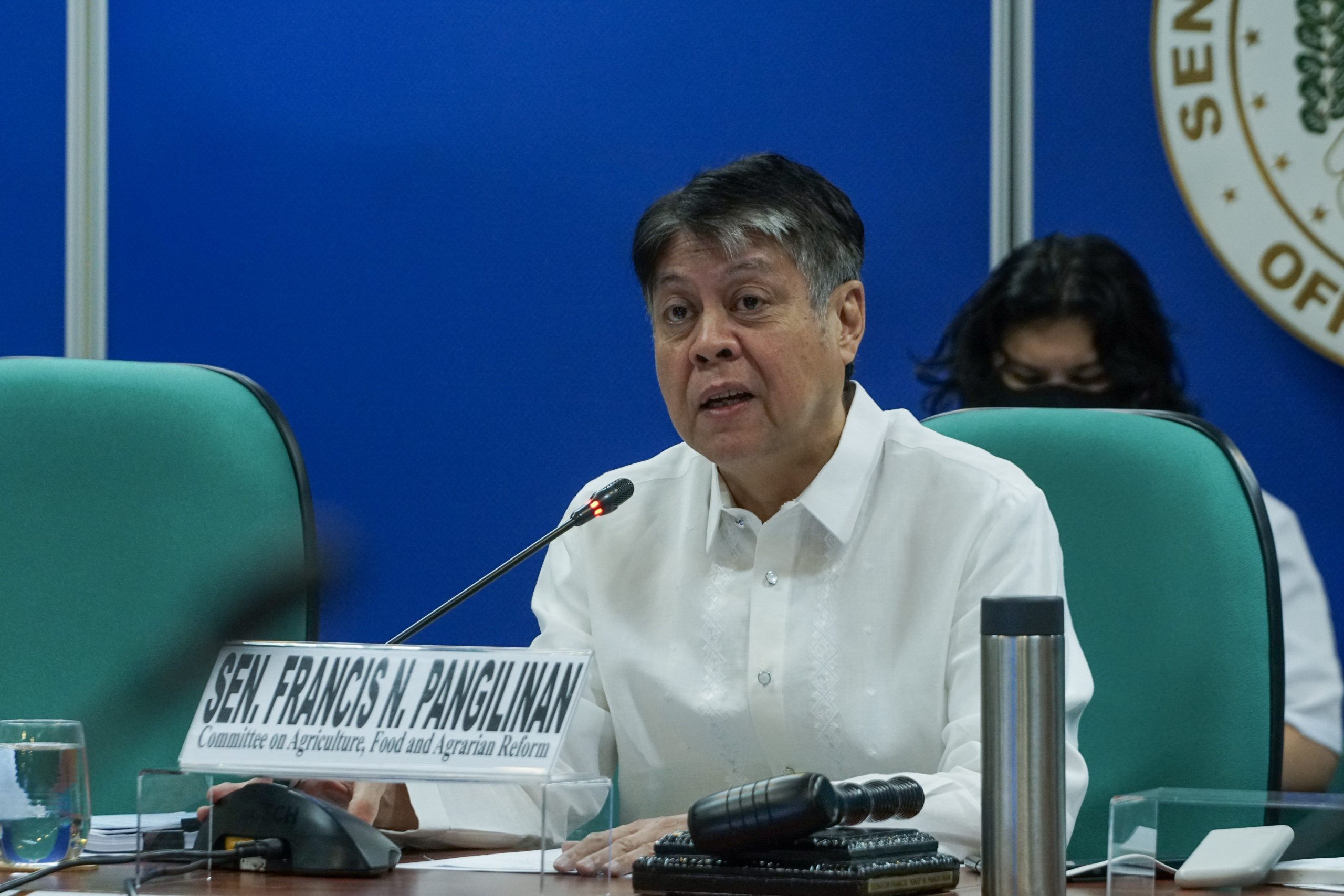
Senator Francis “Kiko” Pangilinan led a Senate committee hearing on Friday, November 20, on the attempted illegal entry of about P700 million worth of smuggled Vietnamese rice into the ports of Davao and Bataan in September.
The lawmaker, who chairs the Senate Committee on Agriculture, Food, and Agrarian Reform, stressed that agricultural smuggling is not merely a revenue and law enforcement concern but a serious threat to the livelihood of Filipino farmers and the country’s food security.
He earlier flagged two incidents of attempted rice smuggling operations in September during a Department of Agriculture (DA) budget hearing, and vowed to open a formal investigation into what he warned was a recurring pattern of government agencies allowing the entry of imported agricultural goods during the local harvest season.
The DA’s 60-day rule dictates that agricultural products must leave the port of origin within 60 days and that their release cannot coincide with the local harvest season to protect farmers from price drops.
“The issue of rice is really a gut issue for our people. And that’s why we want to find out ano bang naging problema rito at ano ba ang dapat natin gawin? Sino ang dapat magpaliwanag? Meron bang pananagutan? And paano natin aayusin itong problemang ito?,” he said in the opening statement of the hearing.
MV Tay Son 2, which was carrying 12,500 metric tons of rice, attempted to leave the Port of Davao without completing the required Customs processing, prompting the Philippine Navy to intercept and apprehend the vessel on the high seas.
On the other hand, MV Lucky Star, which was apprehended at the Port of Limay because its import permit was not consistent with the actual contents of the shipment, was found with nearly 7,500 metric tons of rice.
The two vessels are believed to be carrying a combined 20,000 metric tons of Vietnamese rice, with an estimated value of around P700 million based on the prevailing world market price of $420 per metric ton.
During the hearing, Pangilinan also pushed for tighter coordination among government agencies and clearer rules on the validity of agricultural import permits, particularly when shipments fail to meet their contracted delivery dates.
Pangilinan questioned why an import permit remained valid even after the contract’s July 31 delivery deadline had lapsed, pointing out the lack of communication between concerned agencies.
“Pero sa inyo, hindi pa expired yung kontrata. Wala kayong group chat?” Pangilinan asked, stressing the need for agencies to coordinate before issuing permits.
He proposed amending existing regulations to ensure that import permits are automatically revoked when the agreed delivery dates are not met. “Can you amend the regulation so that it is clear that when the permits have delivery dates are not complied with, it is automatically revoked? Kasi diyan ang nangyayari. May valid permit pero iba na yung kontrata. Iba-iba yung patakaran,” Pangilinan said.
The hearing on Friday seeks to establish the extent of agricultural smuggling, examine possible lapses in border protection, the issuance and monitoring of agricultural import permits, and determine the accountability of government officials and other individuals who may be involved in the illegal entry of agricultural products.
The unchecked entry of smuggled agricultural products can undermine farmgate prices, discourage local production, and put legitimate traders and importers at a disadvantage, the senator pointed out.
In his opening statement, the senator also lamented that the Philippines has become the world’s largest rice importer, warning that heavy reliance on imported rice contributes to spikes in rice inflation, which in turn drives up overall inflation nationwide.
Recalling his tenure as the country’s food security czar from 2014 to 2015, Pangilinan cited how rice inflation was brought down to just 0.8% in September 2015, while nationwide inflation dropped to 1.5%—its lowest level in 20 years.