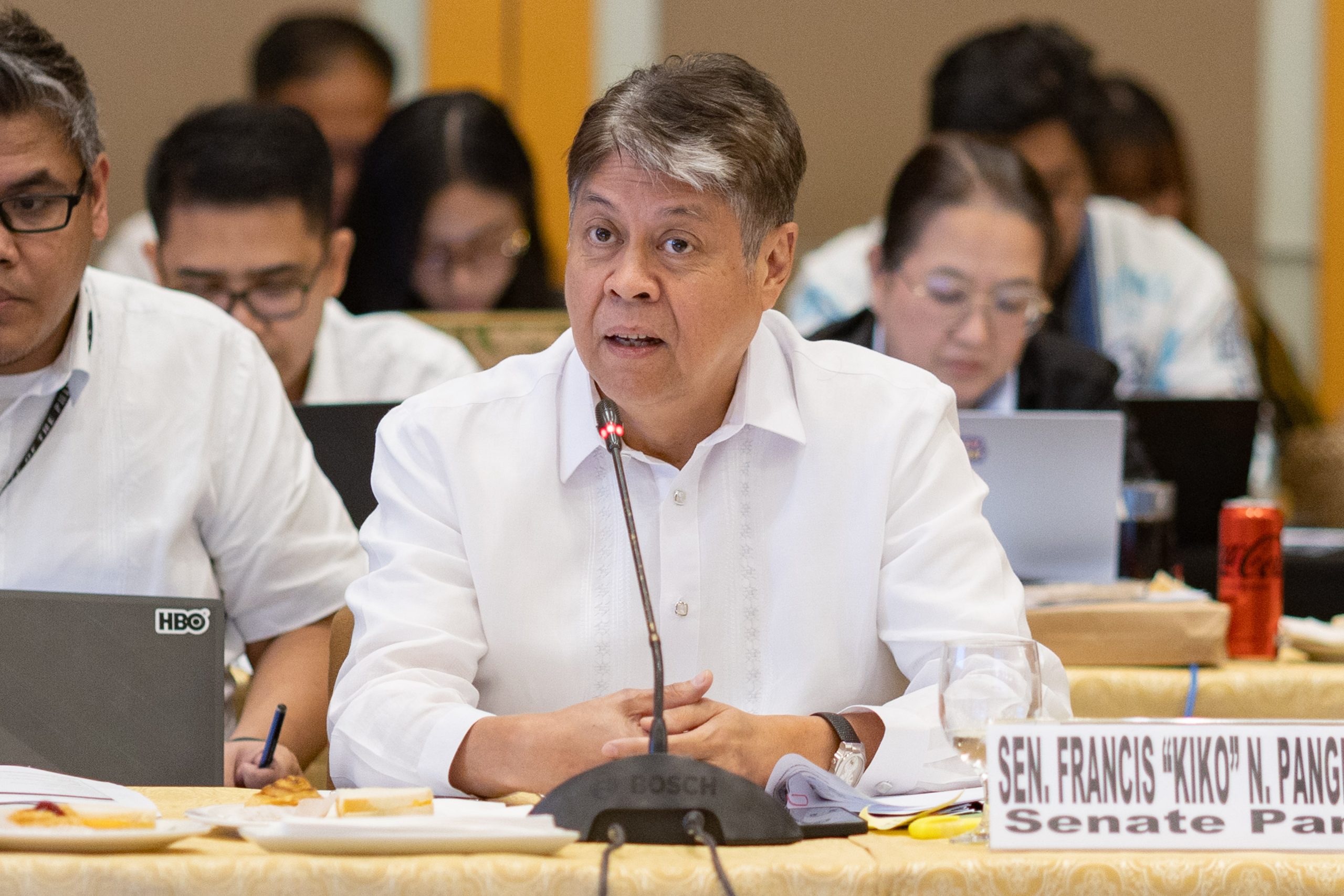
Senator Francis “Kiko” Pangilinan said the proposed 2026 national budget delivers the highest Department of Agriculture (DA) allocation since 2010, a major step toward raising farmers’ incomes and tackling hunger, especially among young Filipinos.
“Gumalaw ang baso, ika nga ng Gen Z. Naging main quest ang side quest,” said the chairman of the Senate Committee on Agriculture and of a Senate sub-committee for the 2026 budget.
“The 2026 budget shows agriculture becomes a priority again. Malinaw ang gusto nating outcome sa budget na ito: tumaas ang kita ng ating farmers and fishers, at mas masustansya at abot-kayang pagkain para sa lahat ng pamilyang Pilipino,” he said.
The DA family’s budget reaches a historic ₱214.39 billion, including ₱185.8-B for the DA Office of the Secretary and ₱28.62-B for attached agencies. Key amendments focus on areas that directly affect farm incomes and food security: credit, insurance, direct market access, and nutrition.
Credit and risk protection were strengthened, with the Agricultural Credit Policy Council budget raised from ₱2.864-B in the House version to ₱3.114-B and crop insurance increased from ₱5.5-B to ₱6.5-B, helping farmers avoid debt traps and recover faster from typhoons and other climate shocks.
“Kapag nagastos nang tama ang mga budget na ito sa pautang at insurance, hindi na kailangang mangutang sa ‘5-6’ ang ating mga magsasaka at mangingisda. Hindi na sila mababaon sa utang at mas madali nang makabangon sa mga bagyo at ibang sakuna,” Pangilinan said.
Nutrition-linked agriculture also got a boost. Nearly ₱3-B for milk feeding was transferred to the National Dairy Authority (₱1.85-B) and the Philippine Carabao Center (₱1.12-B), allowing milk to be sourced directly from local dairy farmers. With the increased budget, the School-Based Feeding Program has been extended from 120 to 200 school days, including 30 days of the milk feeding program. This initiative aims to enhance nutrition for kindergarten to Grade 1 learners, while also supporting Grade 2 to Grade 6 learners who are wasted to severely wasted.
For the first time since its enactment in 2019, Sagip Saka Act, which finally operationalizes direct government procurement from farmers and fisherfolk, gets ₱500 million. The funding will support a pilot implementation covering 17 to 27 cooperatives and associations, benefiting an estimated 9,950 farmers and fisherfolk.
“Direkta nang mamimili ang DepEd, DOH, at iba pang ahensya ng pamahalaan sa ating food producers. Sisiguruhin nito na may bibili ng ani at huli ng ating mga magsasaka at mangingisda,” Pangilinan said.
In fisheries, the Bureau of Fisheries and Aquatic Resources (BFAR) received ₱602 million more for monitoring, control, and surveillance, as well as new support for mobile water treatment and desalination systems for fishing households.
Budget documents also show the introduction of the Bio-Security for Agriculture and Fishery Enforcement Project (Bio-SAFE Project) (from zero to ₱1-B), as well as higher funding for Kadiwa ni Ani at Kita (from ₱250-M to ₱300-M) and Agricultural Food Hubs (from ₱2.125-B to ₱2.625-B).
Pangilinan said that the Bio-SAFE Project will be established at major ports to strengthen agri-fishery quarantine, inspection, and enforcement procedures at the border. This initiative aims to implement ‘first border’ controls to ensure food safety and prevent the entry of plant pests and animal diseases. It will also strengthen the country’s efforts to prevent the rampant smuggling of agri products.
The food hubs, on the other hand, provide modern storage, processing, and transport so that local produce moves faster and more efficiently from farms to markets, reducing wastes and costs.
“’Pag pinagsama-sama mo itong mga programang ito, mas ligtas, patas, at abot-kaya ang ating sistema ng pagkain. Itong ganitong budget ang dasurv ng mga nagpapakain sa atin at ng mga kabataang kinabukasan ng bayan,” he said.
Ang susunod na hamon ay nasa tama at masinop na paggastos ng pera ng bayan.”