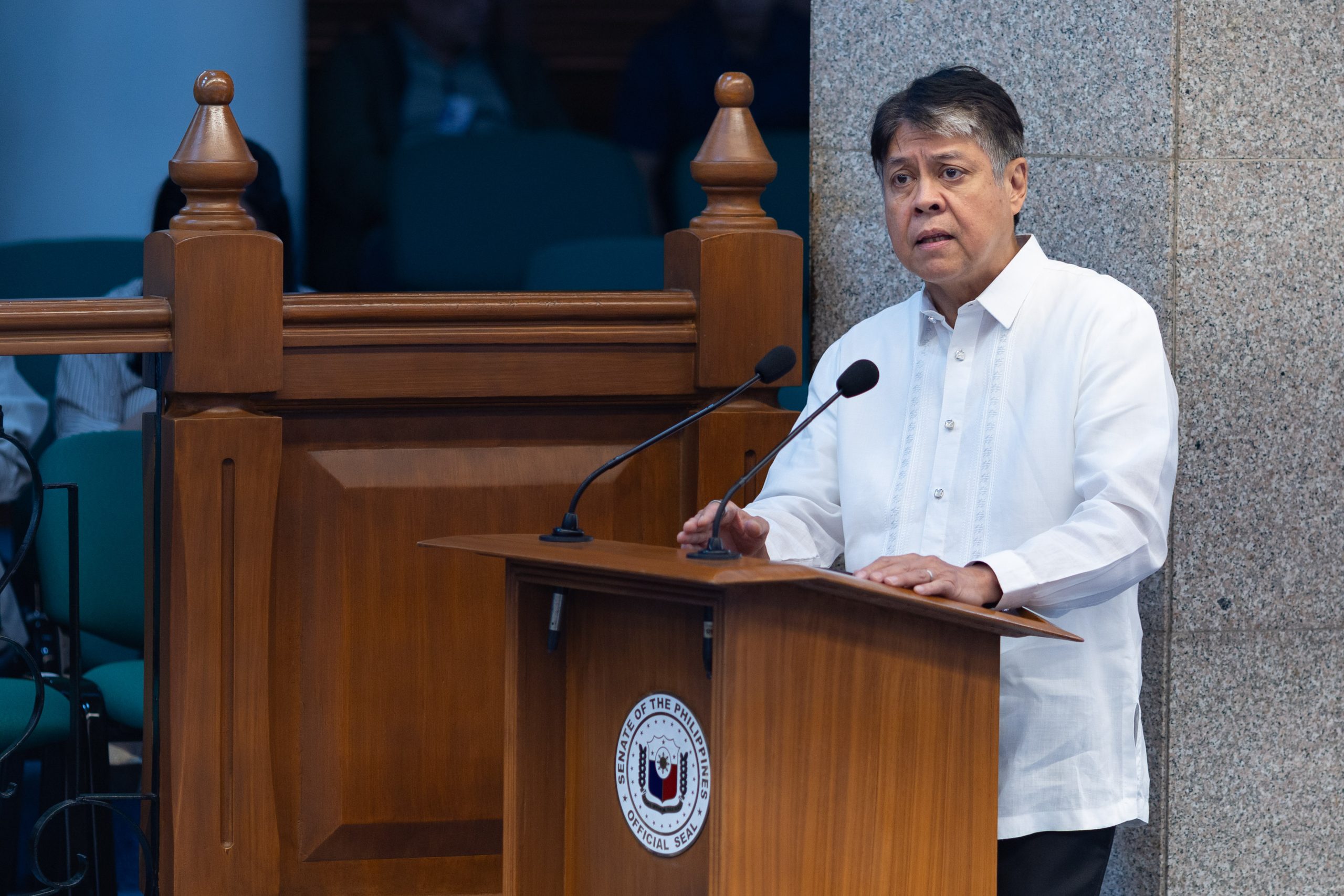
Sen. Francis “Kiko” Pangilinan on Tuesday, November 24, underscored the Senate’s constitutional role in crafting the country’s foreign policy, saying senators must be free to express their positions on issues such as the West Philippine Sea (WPS).
During the plenary deliberations on the proposed ₱7.2-trillion national budget for 2027, Pangilinan sought clarification from Sen. Erwin Tulfo, sponsor of the proposed budget of the Department of Foreign Affairs (DFA) and its attached agencies, regarding a previous DFA statement on comments by Philippine officials about the WPS.
Pangilinan acknowledged that the President is the chief architect of the country’s foreign policy but stressed that the Senate also has a role in shaping its direction.
“Because we have a role in crafting foreign policy, should we not be able to speak on matters of foreign policy, and that what we say should be recognized as part of our mandate?” he asked.
He also sought clarification on whether the DFA’s November 9 statement describing recent public commentary by certain Philippine officials on China as “regrettable” was referring to senators who had spoken out on the West Philippine Sea.
Tulfo clarified that the remarks by Chinese officials cited in the DFA statement were directed at officials of the executive branch, not elected officials in the Senate or Congress. He added that the DFA had called the attention of the Chinese Embassy regarding the matter.
Pangilinan welcomed the clarification but pointed out that the wording of the DFA statement could have caused confusion because it did not clearly distinguish between officials of the executive branch and members of the legislature.
He emphasized that senators have a constitutional responsibility to scrutinize and express their views on the country’s foreign policy, particularly because the Senate exercises its power to ratify treaties.
“How can we ratify treaties if we can’t speak about whether we oppose or object to or support our foreign policy direction?” Pangilinan said.
He said the clarification was important to ensure that senators’ statements on foreign policy are understood as an exercise of their constitutional mandate.